Plover.
I turned a notebook for my Coros watch data into a running app with Claude Code. Deployed in private beta and tested only with my own data.
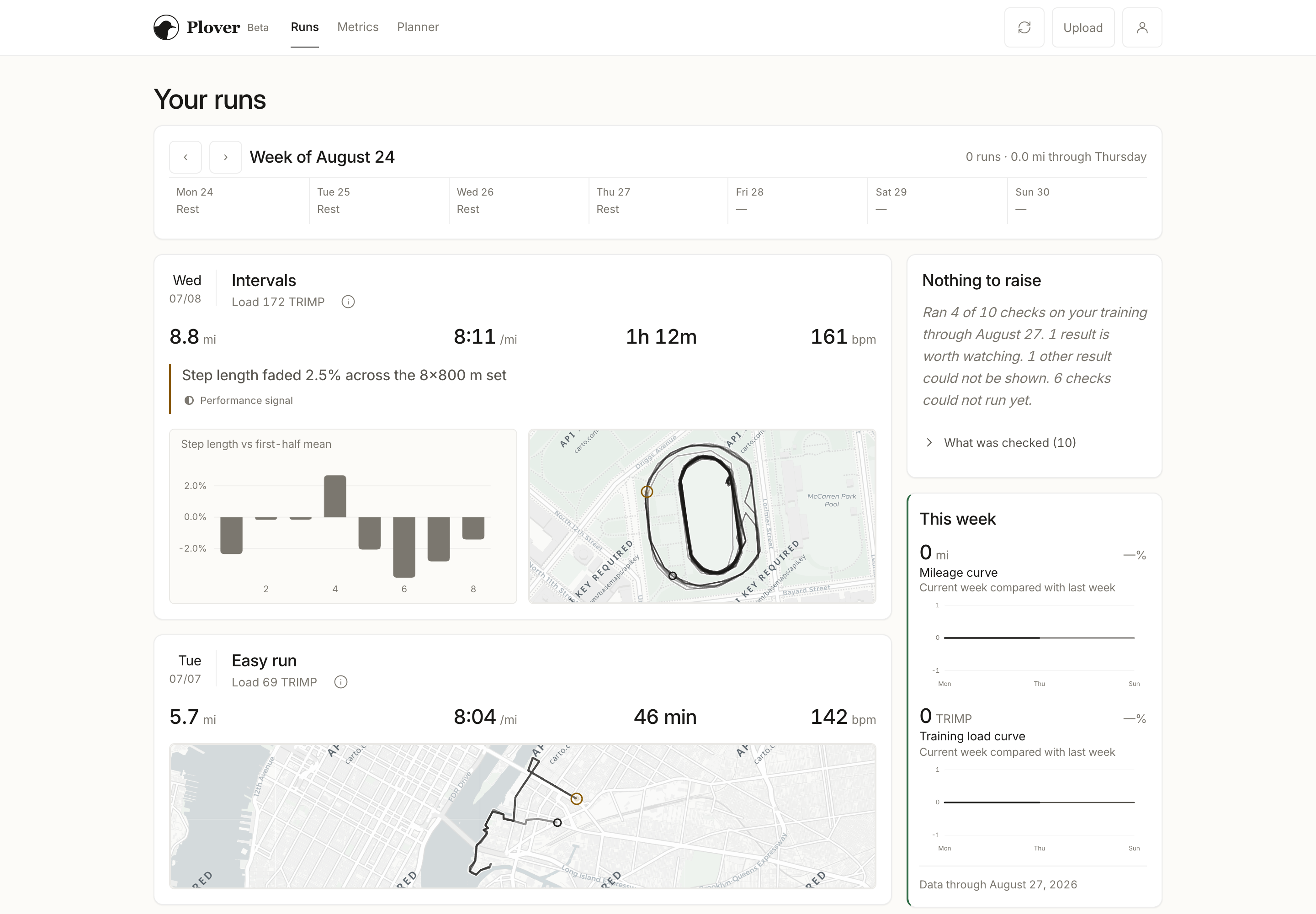
What it is
I started Plover to make sense of changes in my own running data. It shows findings alongside their charts and evidence limits. The Python pipeline calculates the metrics, and the React app displays them. It's deployed in private beta at plover.run, but I'm the only person who has used it with running data. It does not predict injuries.
How I built it with AI
The first deployed version took about twelve days, with Claude Code writing most of the implementation while I made the product and calibration calls. I used the same feed builder for backtests and the app, and added a CI check comparing incremental calculations with a full recompute. Those checks caught calculation changes, but later audits still found authorization bugs and unsupported detector claims. I describe the fixes and the unresolved problems in the case study.
Read the Plover case study for the notebook, interface revisions and engineering decisions.